How Not to Write a Novel, Part 1: Never Say Goodbye
Of the many things I’ve accomplished in my writing career, I’ve been perhaps most consistent at not writing novels. When I was young I pictured adult me as a cross between Stephen King and Angela Lansbury’s character on Murder She Wrote, briskly tip-tapping away at a future bestseller while clad in a cozy sweater. The more rational among us know that childhood dreams are a terrible heading by which to chart one’s future course, because children have no idea what will actually make their adult self happy. What was I thinking success would look like? Autonomy? Wealth? Fame? Cozy sweaters? Bah. I have health insurance, only .00000000001% of writers become wealthy, I am terribly uncomfortable with fame and I own all the cozy sweaters I could ever want or need. I have successfully triumphed over my childhood dream, and it’s with this success in mind that I decided to share some of my secrets, in case you, like me, are similarly afflicted.
With the motivations of wealth and fame swept to one side, one well might say – “Wait, Linda, you actually have written at least one novel! You self-published it back in 2015! It’s still buried at the bottom of my bookshelf!” Um, okay, that is true. I wrote a mystery novel set in a small seaside town with a protagonist named Francisco Frank, aka Franky Frank. It was the first novel I ever finished, the year I turned 30. I have (grimaces) written two novels since then, as well as two children’s books. And they remain unread by anyone but a few close friends because I have a crippling case of perfectionism that makes me wince at the idea of putting anything out in the world to be judged. So I’d really like to be done trying to be a novelist, okay? I have a terrible demoralizing person person as a boss at this particular job (me) and every time I do something she tells me I’m not doing it good enough. Well enough? Doing a good enough job? Whatever, shut up, I’m trying to write a blog.
“But Linda,” you, my hypothetical reader says, “If you’ve known that actually having people read your novels makes you anxious since 2015, why did you keep writing? Why do you have six other novels you’ve gotten a third of the way through writing on your hard drive?”
So, first of all, stop snooping through my computer. And second of all, there’s an answer for that too. The truth is that I and many other people with this particular creative disability have busy, loud, crowded brains full of stories and characters, and sometimes they knock so loudly and persistently that the only way to shut them up is to put them on a page. You want to meet some of the people in there? Fine. Jeez. There’s a very pregnant detective. A woman who hoards lamps. A drunk on an important errand. A sculptor whose most famous work looks like a dog turd. Some of them have made it to the page, some of them are still sitting around, occasionally knocking at my conscience. And some of them are in the rear view mirror of my creative process, slowly getting smaller and less distinct as time, and I, move on.
Which brings me to today’s lesson – if you really don’t want to write a novel, or if you are writing a novel but don’t want to finish it and risk finding out you suck, one of the best things you can do is to never say goodbye to your characters and your ideas. Don’t kill your darlings. Leave those tabs open. Promise yourself you’ll get back to them someday. Let them get stale and distant and slowly perish through neglect. Don’t feel guilty, this serves an important purpose: As long as you have two or three or fourteen ideas that really deserve your attention or that you are definitely going to finish, you don’t have to move on with something else. And if you don’t move on, you don’t have to actually write a novel. Brilliant. It’s working for me, anyway.
Next time: How I failed at not writing a novel and wrote several novels, like a chump.
What I’m Writing: I’m revisiting a project I started a few years ago because one of the characters was inspired by a former neighbor of mine, “Rudy” Gilberto Jimenez Gonzalez. Some of you may know that Rudy was detained after a traffic stop in Wyoming and put in jail on an Immigrations and Customs Enforcement (ICE) hold. He has been in the United States since he was 14 years old. He has no criminal record. I don’t know him well, but when I was his neighbor he embodied what a good neighbor should be. He was friendly and generous and helpful and hard-working and kind. He was pulled over for a broken taillight and imprisoned because he had a California Driver’s License, not a REAL ID. He wasn’t carrying his papers. We are living in a country where good people people are taken away from their families because they aren’t carrying their papers. I want to say more but I am so angry and sad. Anyway, here’s a link to a fundraiser to help the family.
What I’m Reading: This newsletter was inspired by a piece I read on LinkedIn, of all places, by Bob Hutchins. In “We Don’t Say Goodbye Anymore, We Just Stay Reachable,” Hutchins writes about the weird grey edgeless state of constant connection modern technology has created. It reminded me of how I cried during the final shift of my first formative job, working as a desk clerk at a youth hostel in San Francisco. It was 2004 and most of us still had landlines. I knew that I would probably never see or hear from most of the people I worked with there. A few years later we were all on Facebook, which was thrilling but also weird. As Hutchins says, “we've swapped conversation for connection.” So be it friends, projects or plotlines, I’m exploring what it means to create meaning by closing some doors for good.
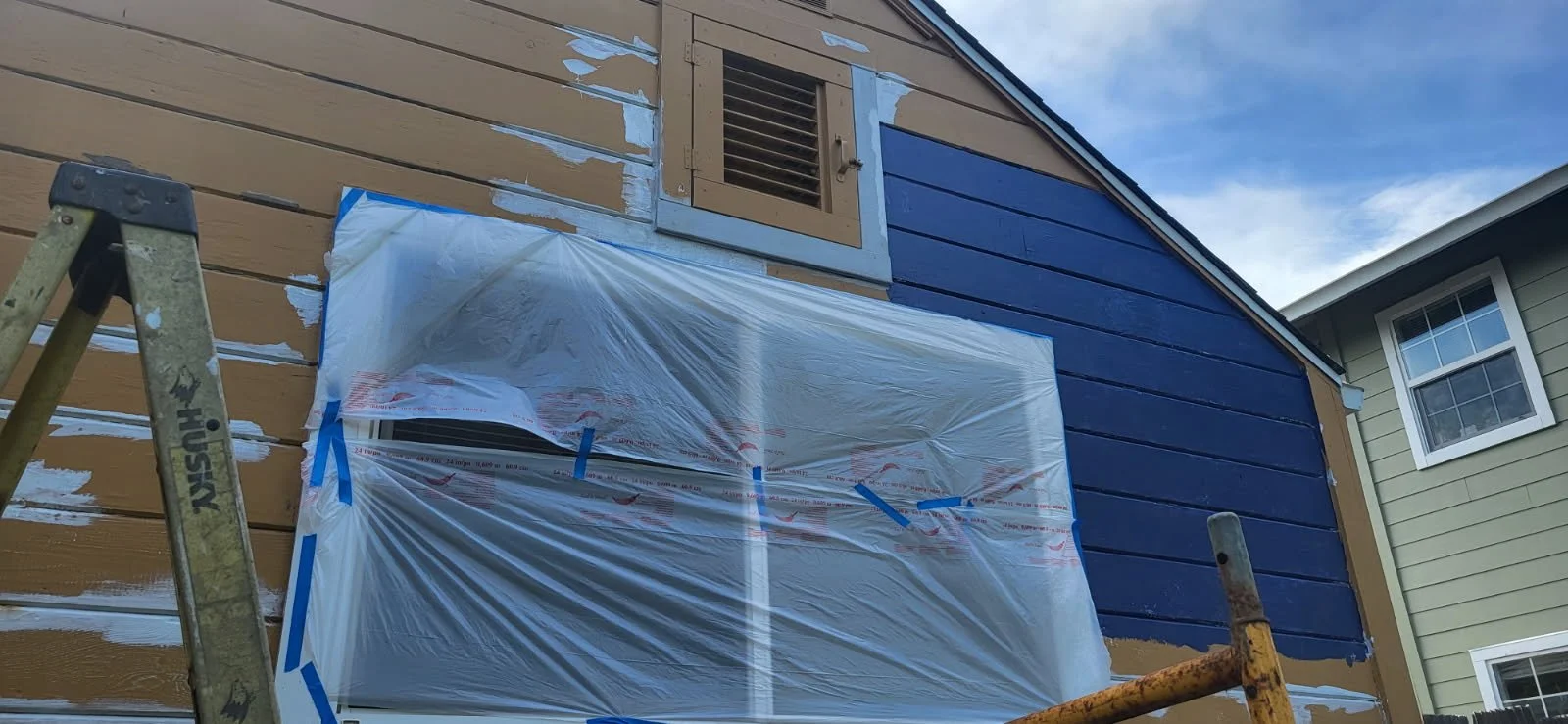
What I’m Doing: Painting my house! (Expect to see those words every week for the next few months. It’s a long process.) I did finally get some of the new color on there, probably a little more hastily than I should have but it felt good. Also enjoying Yard Sale Season. I actually scored some painting supplies from a neighbor down the street who is retired and said rather smugly that she will “never paint again.” SIGH. I did successfully procrastinate my way through an entire free weekend, finding other things to do until literally 3 p.m. on Sunday to start painting, but once I started working at it I found the process extremely meditative. I’m doing it by hand with a brush because my very active 80 something year old neighbor said it will last a lot longer and also because I just like to make things as hard as possible.